Reloading for beginners starts with acquiring a quality starter kit from brands like RCBS or Lyman and following a reloading manual to ensure safety and precision. The process involves cleaning, lubricating, and resizing brass cases before loading small batches to test for accuracy and overpressure.
Between rising costs at the big box stores and the frustration of inconsistent grouping on the range, many shooters feel handcuffed by factory ammunition. Standing at a crossroads in Rutland, you are likely looking for a way to take control of your supply while squeezing every ounce of precision out of your platform. Reloading is often viewed as a dark art reserved for master gunsmiths; however, it is actually a manageable and rewarding discipline that turns your workshop into a custom munitions factory. In this guide, we will break down the barriers to entry by examining the core equipment needed for your first bench, comparing press types, and outlining a safe, repeatable process. From understanding cartridge components to avoiding common safety pitfalls, ELC Pews is here to ensure your transition from consumer to craftsman is seamless and successful.
Why Start Reloading Ammunition in 2024 and Beyond?
Many local shooters walk into our Rutland gun store asking two specific questions: Is reloading worth the effort, and is it too hard to learn? In 2024, the case for building your own ammunition has never been stronger. While a learning curve exists, reloading for beginners is a manageable transition into a rewarding hobby that offers significant practical advantages.
The most immediate benefit is cost control. While savings on common plinking rounds are modest, the margins on precision hunting rounds, common throughout Vermont, can exceed 50 percent compared to retail shelves. Beyond the wallet, reloading offers stability. Instead of relying on volatile store stock, you maintain your own supply of components. For the Rutland deer hunter, the primary draw is often accuracy. Factory loads are designed to function in every firearm; handloads are tuned to your specific rifle, often shrinking group sizes by half.
At ELC Pews, Emily, Eric, Lee, and Mike are here to simplify the technical side. Our team provides the supplies and professional services necessary to ensure your transition from consumer to manufacturer is safe and successful. We can even assist with FFL transfers if you are ordering specialized equipment to get your bench started.
Choosing Your First Press: Single Stage vs. Turret vs. Progressive
The heart of your bench is the press. When starting out, the sheer variety of equipment can be overwhelming, but most setups fall into three distinct categories. Choosing the right one depends on your volume needs and your experience level. At our Rutland gun store, we often guide newcomers toward the single-stage press as their first investment.
The single-stage press is the gold standard for reloading for beginners. We frequently recommend the RCBS Rock Chucker or the Lee Challenger for their rugged O-frame designs. These presses perform one specific task at a time. You resize all your brass, then change the die to expand the case mouth, then change it again to seat the bullet. This deliberate pace is your greatest safety asset. It allows you to focus entirely on one variable, which is critical when learning to feel the primer seat or observing the powder level in a rifle case destined for the Vermont woods.
Turret presses provide a middle ground. They look similar to single-stage units but feature a rotating head that holds multiple dies. Instead of screwing dies in and out for every step, you simply click the turret to the next station. While this increases speed, it still requires a single pull of the handle for every operation.
Progressive presses are high-output machines that produce a finished round with every pull of the lever. While tempting for high-volume shooters, these are generally too complex for a first-timer. Managing five or more stations simultaneously makes it easy to miss a light powder charge or a crushed primer.
Press Type | Primary Benefit | Best For |
|---|---|---|
Single-Stage | Maximum Precision and Safety | Precision Rifle and Beginners |
Turret | Increased Efficiency | Moderate Volume Shooters |
Progressive | High Volume Output | Competitive Pistol Shooters |
If you want to simplify the purchasing process, look for a comprehensive package. Finding the best reloading kit for beginners often leads to bundled sets from Hornady or Lee. These kits include the press, a powder measure, a scale, and essential hand tools; they provide a cost-effective path to a functional bench without the trial and error of buying individual components. Once you have your press selected, you can focus on the specific accessories required to complete the cycle.
The Essential Reloading Equipment List
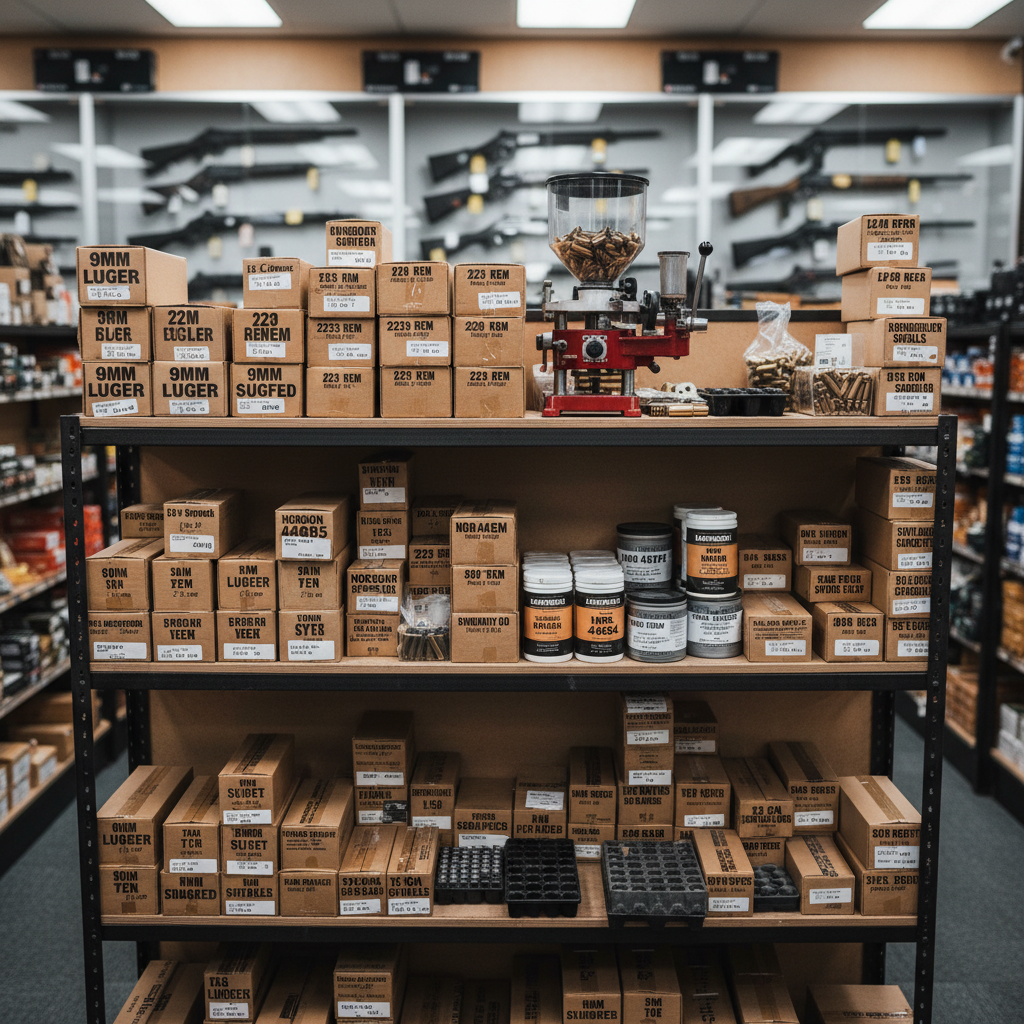
Once you have identified the right press at our Rutland gun store, you need to assemble the supporting tools that transform a bare bench into a functional workshop. The most critical investment you will make is not in steel or lead, but in knowledge. A modern reloading manual from Lyman, Hornady, or Sierra is non-negotiable. These books provide the verified data and safety margins required to build ammunition that performs without risking your firearm or your safety.
Beyond the manual, your reloading for beginners checklist includes several specialized instruments. While some of our professional services include mounting optics or performing FFL transfers, building your own bench requires you to become the lead technician for every round produced.
Caliber-Specific Dies and Shell Holders: These steel tools thread into the press to resize the brass and seat the bullet. You need a specific set for every caliber you intend to load.
Powder Scale: Precision is measured in tenths of a grain. You can choose a mechanical balance beam for its lifelong reliability or a digital scale for faster readouts.
Powder Funnel: This prevents powder loss and ensures the charge drops cleanly into the case mouth.
Calipers: You will use these to measure the Over All Length (OAL) of your cartridges. Maintaining the correct OAL ensures the round feeds reliably and maintains safe pressure levels.
Case Trimmer: Fired brass stretches under pressure. A trimmer cuts the brass back to the standard length found in your manual.
Priming Tool: While many presses include a priming arm, a dedicated handheld priming tool offers a better tactile feel for seating the primer correctly into the case pocket.
The Four Components of a Cartridge
Before you pull the handle on your press, you must understand the four distinct parts that make up a finished round. In the context of reloading for beginners, these raw materials are categorized into reusable hardware and one time use consumables.
The brass case is the foundation of the cartridge. Unlike the other components, brass is reusable. You can often find once fired cases at local Rutland ranges or purchase them from a Rutland gun store to keep costs down. Over time, the brass will stretch or crack, but a single quality case can typically be reloaded many times before it needs to be scrapped.
The remaining three components are consumables that must be replaced with every shot:
Primers: These small metal cups contain the ignition mix. They are sized as small or large for either rifle or pistol applications.
Powder: Modern reloading uses smokeless powder exclusively. Each powder has a specific burn rate designed for certain calibers and barrel lengths.
Bullets: This is the projectile that leaves the barrel. The weight and shape of the bullet are the primary factors in determining your powder charge.
Every component must be compatible. A common mistake is assuming any gunpowder works for any caliber. You must always cross reference your specific bullet weight and brand with the powder types listed in your manual to ensure safe pressures.
A Step by Step Guide to Your First Reload

Once you have your components gathered and your bench organized, you are ready to begin the assembly process. This sequence requires focus; even a minor distraction can lead to errors that compromise safety. For those just starting with reloading for beginners, we recommend processing your brass in batches to ensure consistency across every round you produce for the Vermont hunting season.
Case Inspection: Start by examining your brass. Look for split necks, thin spots near the base, or cracks in the headstamp area. Discard any brass that shows signs of fatigue, as a case failure in the chamber can be dangerous.
Cleaning: Dirt and grit act like sandpaper on your precision dies. Use a dry media tumbler or a wet ultrasonic cleaner to remove carbon and debris. Clean brass is easier to inspect and flows more smoothly through the press at our Rutland gun store.
Resizing and De-priming: Apply a thin layer of case lubricant to the exterior of the brass. Run the case into the resizing die to return the metal to factory dimensions. During this stroke, the decapping pin will punch the spent primer out of the bottom of the case.
Trimming to Length: Firing and resizing cause brass to stretch. Use your calipers to measure the case. If it exceeds the maximum length allowed in your manual, use a case trimmer to cut it back to the "trim-to" specification.
Priming: Use a hand tool or the priming arm on your press to seat a new primer into the cleaned pocket. You should feel the primer bottom out. It should sit flush or slightly below the base of the brass.
Charging with Powder: This is the most critical step. Use your scale to weigh the exact charge recommended by your manual. After dropping the powder through a funnel, place the case in a loading block. Before moving to the next step, use a flashlight to visually verify that every case has a consistent powder level.
Seating the Bullet: Place a bullet on the mouth of the charged case and run it into the seating die. Adjust the die until the cartridge reaches the correct Overall Length (OAL). A round that is too long may not chamber, while one seated too deeply can cause dangerous pressure spikes.
If you encounter resistance at any stage, stop and evaluate the cause. Forcing a press handle usually indicates a setup error. If you are unsure about the feel of your equipment, Emily, Eric, Lee, or Mike can offer guidance on proper tool adjustment and professional services to help you troubleshoot your bench setup.
Safety First: Avoiding Common Beginner Reloading Mistakes
Maintaining a disciplined workspace is the most effective way to avoid common reloading safety beginner mistakes. The most critical rule for your bench is to never have more than one canister of powder open or even on the table at a time. Many smokeless powders look identical but possess vastly different burn rates; accidentally charging a large rifle case with a fast burning pistol powder can lead to catastrophic firearm failure and serious injury.
You must also remain vigilant against the dual threats of overcharging and undercharging. A double charge, which is easy to do if you are distracted during the powder drop, creates massive pressure spikes that your firearm’s action is not designed to contain. Conversely, an undercharge can lead to a "squib load," where the bullet lacks the energy to exit the barrel and remains lodged in the bore. Firing a subsequent round into an obstructed barrel is a recipe for a burst pipe.
Always source your load data from reputable, laboratory-tested manuals like those from Lyman or Hornady. While internet forums are filled with "pet loads," these are often unverified and may exceed safe pressure limits for your specific firearm. Stick to the recipes. If you are unsure about a specific data point or need professional services to check your equipment, visit our Rutland gun store. Emily, Eric, Lee, and Mike are here to help you navigate the data and ensure your process is as safe as possible.
Getting Started with ELC Pews in Rutland

Building your first bench is a significant step toward self-sufficiency as a shooter. At ELC Pews, we stock the powders, primers, and projectiles needed to get your project off the ground. Because we frequently purchase private collections and individual firearms, our Rutland gun store often has unique opportunities to acquire used equipment or bulk brass that can lower the entry cost of reloading for beginners.
Beyond the raw materials, our team offers the professional services required to ensure your reloaded rounds perform as expected. If you have questions about which powder burn rate is optimal for a .30-06 Springfield or need help selecting the right optics for a Vermont deer rifle, Emily, Eric, Lee, or Mike are available to help. We can also handle FFL transfers for specialized presses or tools you might find online. Visit us in Rutland to discuss your specific goals for the upcoming hunting seasons and let us help you build a bench that delivers precision every time you pull the trigger.
Starting your own reloading bench in Rutland is a rewarding journey that offers precision and cost savings for any local shooter. By focusing on quality equipment and safety, you can build a setup that serves you for years. While the process is straightforward with practice, you might prefer a bit of guidance during your initial setup. If you want expert help to ensure your bench meets the highest standards, feel free to explore our services. We are here to support your hobby every step of the way.