The Trijicon Credo HX 2.5-10x56 is often cited as the best low light rifle scope for deer hunting due to its specialized design for dawn and dusk conditions. Utilizing a 50mm objective lens and premium glass can provide hunters with fifteen additional minutes of legal shooting light compared to smaller 40mm alternatives. Other high quality options such as the Leupold VX-5HD also offer the superior light transmission necessary for tracking game in dense or dark timber.
You have tracked a Vermont buck through the dense hemlocks of the Green Mountains for hours, only for him to step into a clearing during the final, grey moments of legal shooting light. It is a frustrating experience to lose that trophy because your reticle vanished against his dark hide or your view turned into a muddy, grey blur. In the thick timber of the Northeast, light is your most precious resource. Understanding the technical synergy between glass quality, objective lens diameter, and exit pupil is what separates a successful freezer fill from a long walk back to the truck in the dark. We are breaking down exactly how to choose an optic that excels in the shadows. You will learn why magnification might be working against you, which reticles thrive in dim conditions, and our top picks for the best low light rifle scope for the money.
The Challenge of Late Season Light in the Green Mountains
Late November in the Green Mountains brings a specific kind of pressure to the final hour of the day. As the sun dips behind the steep ridges of the Green Mountain National Forest, the light does not just fade; it vanishes. For a hunter near Rutland, the golden hour at dawn and dusk is when mature bucks are most likely to move between bedding and feeding areas. However, the dense canopy of hemlock and hardwood creates a micro-environment that is significantly darker than the open fields found in the Midwest or southern states.
Success during these critical minutes depends entirely on your glass. Identifying a legal buck against a backdrop of dark timber requires superior light transmission and contrast. Finding the best low light rifle scope for deer hunting in Vermont is not just about high magnification; it is about how much usable light reaches your eye when the shadows are deepest. At ELC Pews, we spend our seasons navigating these same hills. We know that a scope which looks clear in a bright showroom can fail you when a buck appears in a dark hollow at 4:15 PM. Our selection of firearms and optics is curated for these exact conditions, ensuring your equipment matches the reality of the Vermont woods.
Objective Lens Diameter: 40mm vs 50mm for Low Light Hunting
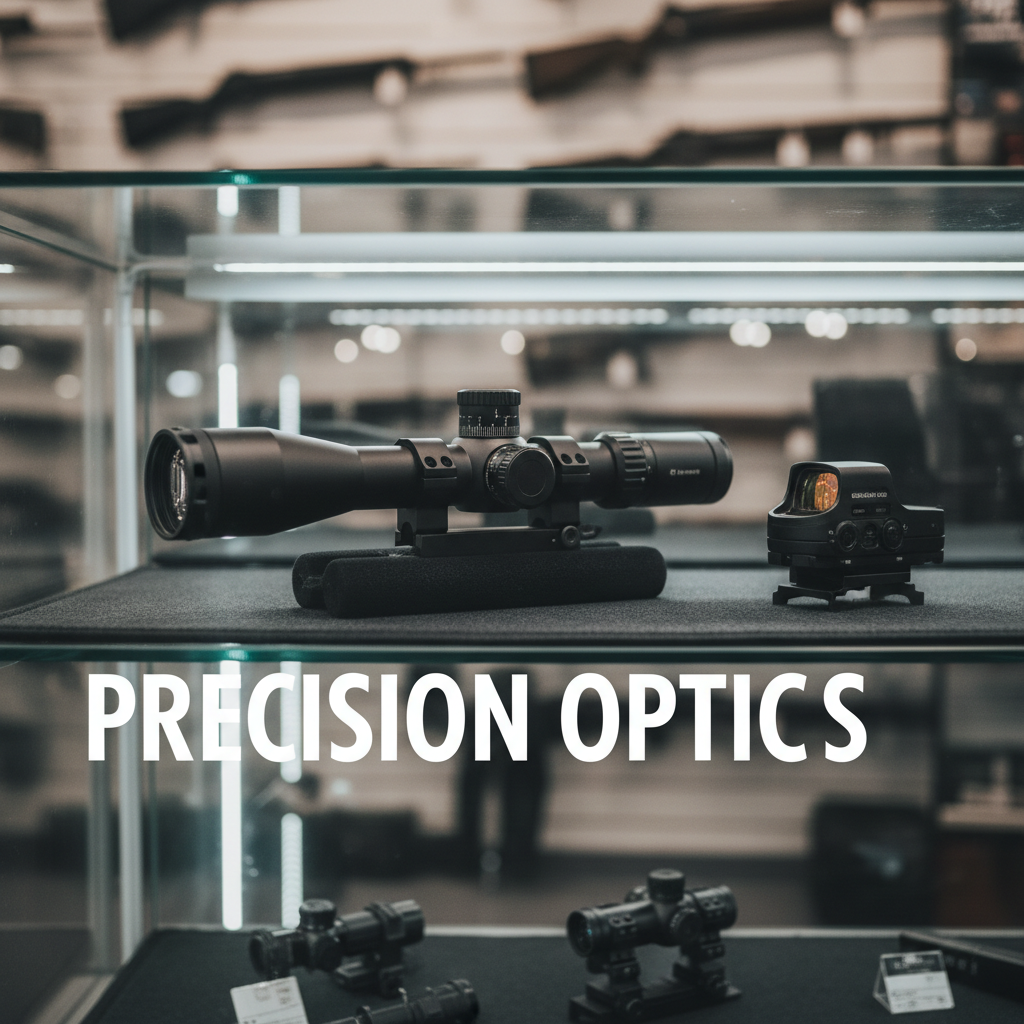
Deciding between a 40mm and a 50mm objective lens is a primary concern for hunters visiting our Rutland shop. The logic seems simple: a larger lens acts like a bigger window to let in more light. Mathematically, this is true. A 50mm lens offers approximately 55 percent more surface area than a 40mm lens; that extra glass is designed to funnel more photons into the tube during those final, murky minutes of legal shooting light.
However, raw size comes with practical costs in the Vermont terrain. A 50mm objective usually requires high mounting rings to clear the barrel. This raises the optic's centerline, which often forces a hunter to lift their head off the stock, compromising a solid cheek weld. When you are trekking up steep ridges in the Green Mountain National Forest, every extra ounce of weight and every fraction of an inch in profile matters. A rifle that feels unbalanced or requires a "floating" head position can lead to missed opportunities when a shot must be taken quickly in a tight hardwood stand.
Glass quality frequently trumps diameter. A premium 40mm lens with high-end multi-coatings will often outperform a budget 50mm lens that lacks proper light transmission technology. For those looking for the best low light rifle scope for deer hunting in these woods, we often recommend the 44mm objective as the ideal middle ground. It provides a noticeable boost in light gathering over a 40mm while remaining low enough for standard mounting and maintaining a streamlined profile for the brush. We carry a variety of optics and accessories that balance these factors to ensure your setup remains practical for local conditions.
Why Exit Pupil is the Secret to Seeing Through the Shadows
Beyond raw lens size, the most overlooked factor for selecting the best low light rifle scope for deer hunting is the exit pupil. This technical term refers to the actual column of light that reaches your eye through the ocular lens. You can calculate this by dividing the objective lens diameter by your current magnification setting. Understanding this math is the difference between seeing a clear rack and staring into a dark tube as the sun sets over the Green Mountains.
For example, if you are using a 50mm scope set to 7x magnification, the exit pupil is 7.1mm. This is the gold standard for Vermont hunters because a healthy human eye dilates to approximately 7mm in near-dark conditions. When the exit pupil matches your eye's dilation, you are receiving the maximum amount of light your biology can process.
One common mistake we see at our Rutland shop is hunters cranking their magnification to 15x or 20x to see into a dark thicket. As you increase magnification, the exit pupil shrinks. A 50mm scope at 20x magnification produces a tiny 2.5mm beam of light. Because this beam is much smaller than your dilated pupil, the image will appear significantly darker and grainier. During those final minutes of legal shooting light, keeping your magnification low ensures your optics and accessories provide the brightness needed to make an ethical shot.
Magnification Needs for Vermont Whitetails: Less is Often More
Maintaining a large exit pupil naturally leads to a discussion on magnification settings. When people ask what is the best magnification for a rifle scope for deer hunting, they often gravitate toward the highest numbers on the dial. However, Vermont hunting rarely involves the long-range shots common in the Midwest or out West. In the dense timber surrounding Rutland, a 200 yard shot is an outlier; most encounters happen well within 75 yards.
For our local terrain, versatile ranges like 2.5-10x or the classic 3-9x are nearly impossible to beat. A low bottom end, specifically 2x or 3x, is vital for quick target acquisition. If a buck steps into a hemlock thicket at dusk, a high magnification setting creates a narrow field of view that makes it difficult to find the animal in your glass. Starting at a lower power allows you to shoulder the rifle and find your point of aim instantly, which is critical when seconds count in fading light.
While you will spend most of your time on the lower settings, a 10x maximum provides more than enough precision for the occasional shot across a powerline cut or a local hay field edge. Choosing the best low light rifle scope for deer hunting means prioritizing this practical flexibility over extreme zoom. This approach ensures your selection of firearms and optics remains effective from the first minute of legal light until the very last.
Reticle Choices and the Value of Illumination at Legal Light
Standard target reticles often feature fine, thin wires designed for precision on a bright range. In the Vermont woods at sunset, these thin lines frequently disappear against the dark, textured coat of a whitetail standing in deep timber. For the best low light rifle scope for deer hunting, we recommend opting for a heavier reticle style. A bold Duplex or a German #4 reticle uses thicker outer posts that naturally guide your eye to the center, even when the fine crosshair starts to wash out in the shadows.
Illumination takes this a step further. During the final fifteen minutes of legal shooting light in Rutland County, a tiny, adjustable red dot in the center of your reticle provides a clear point of aim. This prevents the common problem of losing the crosshairs against a deer’s dark shoulder. When browsing our optics and accessories, look for scopes with multiple brightness settings. You want the dot faint enough to not blow out your natural low light vision, yet bright enough to give you confidence in your shot placement as the day ends.
Top Recommendations: The Best Low Light Rifle Scope for the Money
Selecting the best low light rifle scope for deer hunting often comes down to balancing glass quality with your personal budget. In our Rutland shop, we evaluate optics based on their ability to handle the specific moisture and temperature swings common to a Vermont November. We look for fully multi-coated lenses, which use multiple layers of anti-reflective compounds on all air-to-glass surfaces to maximize light transmission and reduce the glare that often occurs when the sun sits low on the horizon.
Top Tier Performance Categories
Price Tier | Recommended Models | Key Strength for Vermont |
|---|---|---|
Under $500 | Meopta Optika5, Vortex Crossfire II | Exceptional value and moisture-sealed reliability |
Under $1,000 | Leupold VX-3HD, Trijicon Credo | Advanced light management and rugged internals |
For hunters staying under the $500 mark, the Meopta Optika5 stands out due to its proprietary MeoBright ion-assisted multi-coatings. These coatings are specifically designed to eliminate glare and reflections, which is vital when you are hunting in the shifting light of a hemlock stand. The Vortex Crossfire II is another rugged contender, featuring a nitrogen-purged and O-ring-sealed body that prevents internal fogging during those damp, freezing mornings near the Green Mountain National Forest.
If your budget allows for the under $1,000 category, the Leupold VX-3HD is a perennial favorite in our selection of firearms and optics. It utilizes the Twilight Max Light Management System, which is engineered to add up to 20 extra minutes of shooting light by filtering out stray light waves. For those who prioritize durability, the Trijicon Credo offers tactical-grade construction that survives the inevitable bumps and drops on steep, icy ridges. These optics and accessories are built to maintain zero and clarity even when the Vermont weather turns harsh and unforgiving.
The Importance of Professional Scope Mounting for Late Season Success
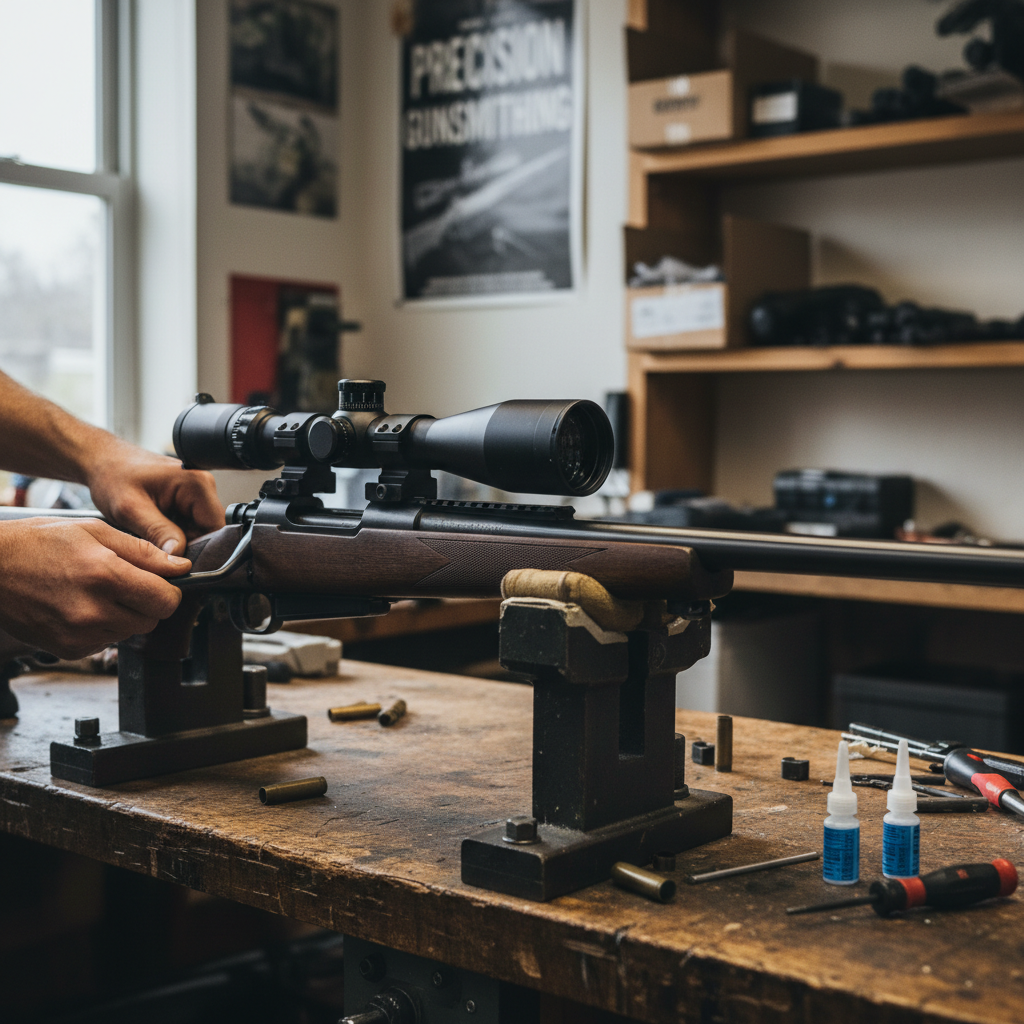
Investing in the best low light rifle scope for deer hunting is only half the battle. If that optic is not mounted with perfect level and proper eye relief, your advantage in the shadows disappears. A canted reticle leads to missed shots at distance, while incorrect eye relief slows down your target acquisition when a buck appears suddenly in thick cover. Vermont's late season brings extreme temperature swings that test the integrity of your hardware. Rapidly dropping temperatures cause metal to contract, which often leads to shifting zeros if rings are low quality or improperly seated.
At ELC Pews, we provide professional scope mounting to ensure your optics and accessories are secured for the long haul. We use precision levels and calibrated torque wrenches to meet exact manufacturer specifications, preventing the crushed tubes or loose screws that plague many DIY setups. Before you head into the Green Mountain National Forest, bring your rifle into our Rutland shop. We will ensure your setup is rugged, aligned, and ready for the final legal light of the season.
Selecting the perfect low light rifle scope ensures you are ready when that trophy buck appears during the final minutes of legal shooting light. By prioritizing premium glass and proper objective lens diameter, you can navigate the thick Vermont timber with confidence. If you find the technical specifications or the mounting process a bit daunting, we are here to support your journey. You can explore our professional Services to ensure your equipment is perfectly tuned for your next hunt. We want to help you achieve the best possible performance in the field.