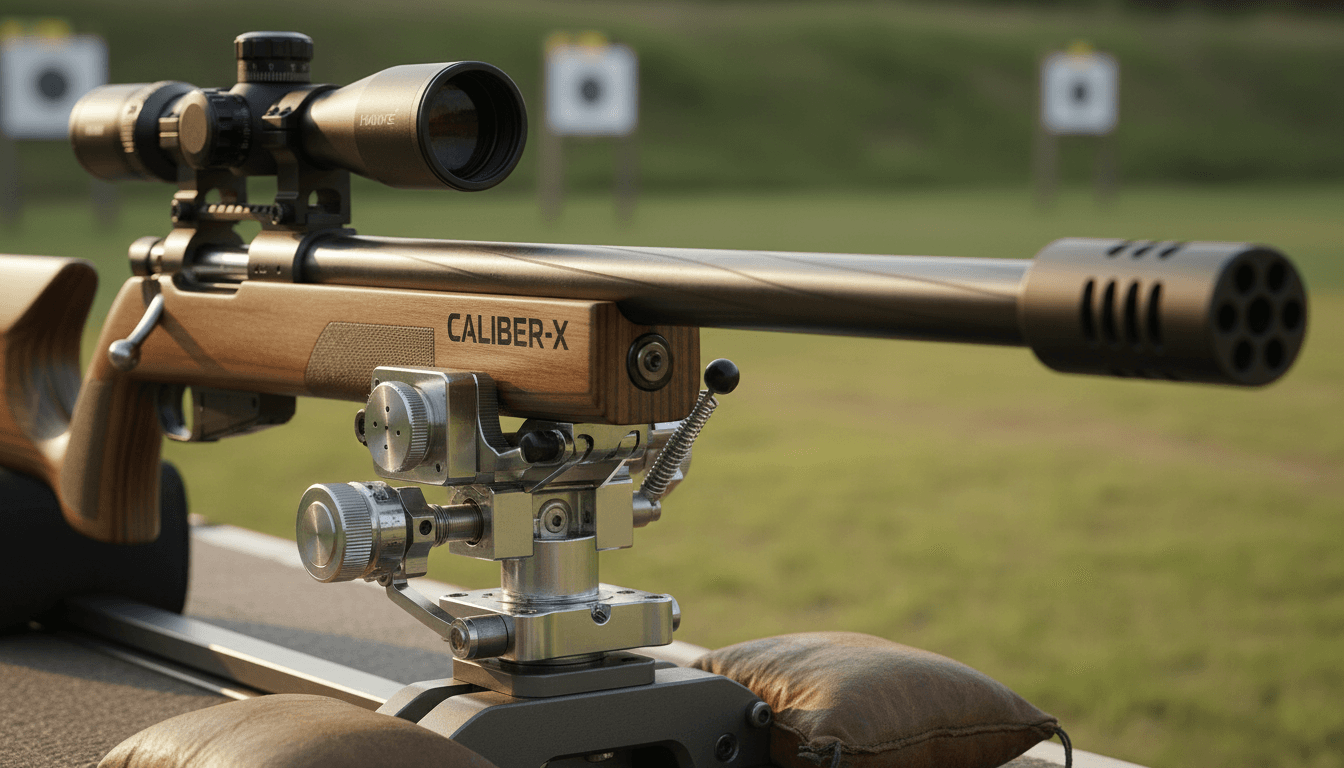
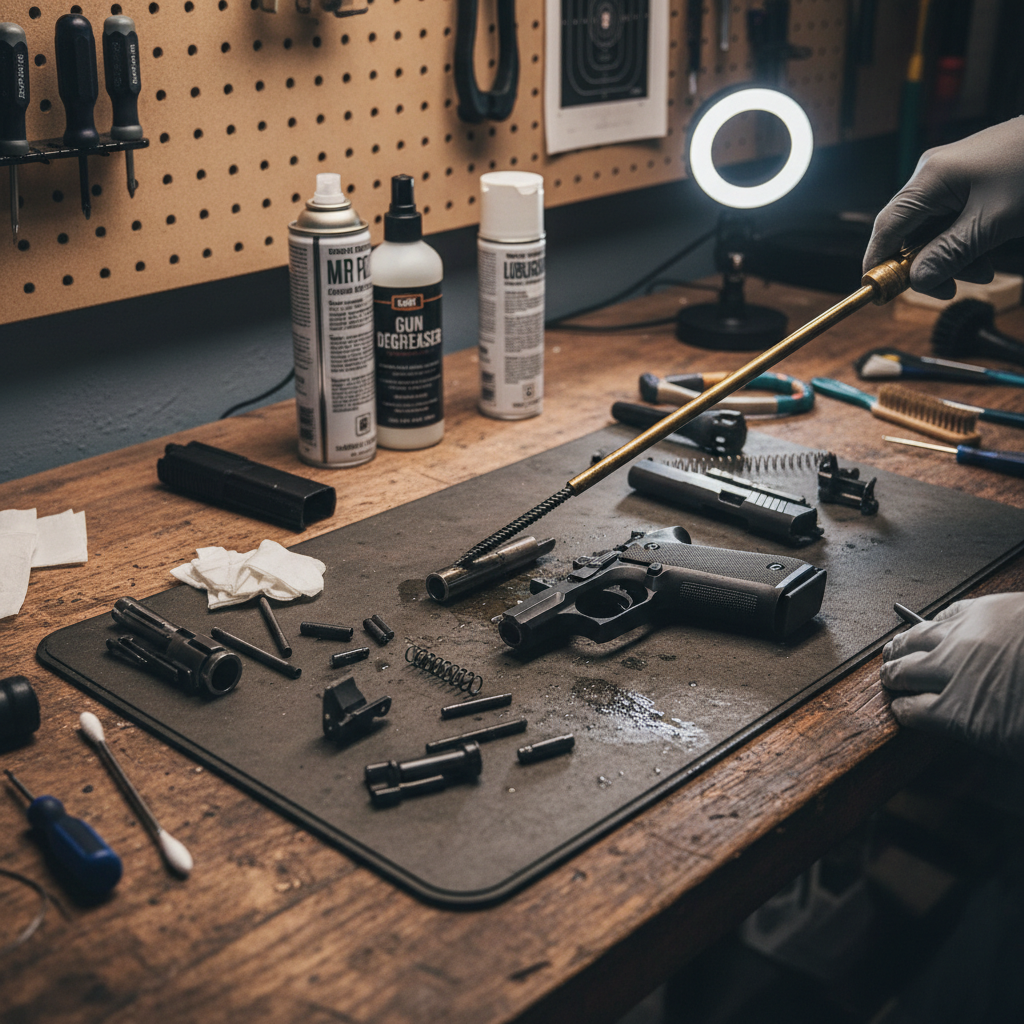
To learn how to clean a gun, first ensure the firearm is completely unloaded and safe before disassembling it to access internal components. Use a dedicated cleaning kit with solvent to remove carbon buildup from the bore and action; then apply a light layer of gun oil to lubricate moving parts and prevent corrosion. Complete the process by reassembling the firearm and performing a function check to verify it operates smoothly.
A carbon-caked slide or a gritty trigger pull can turn a precision tool into a liability, especially when Vermont's humid summers or damp hunting seasons are factored into the equation. For the discerning shooter, proper maintenance is not just about aesthetics; it is about ensuring your firearm cycles reliably every time you pull the trigger. Neglecting the buildup of lead, copper, and carbon eventually leads to malfunctions that could compromise your safety or performance at the range. This guide breaks down the essential steps for maintaining your handguns and long guns, from selecting the right solvents to deciding between a bore snake and a traditional cleaning rod. You will learn the specific protocols for post-hunt care in the Green Mountains and how to avoid the common mistakes that plague even seasoned shooters.
Why Firearm Maintenance Matters in the Green Mountain State
Keeping your firearms in top condition is not about keeping them pretty for a display case. It is fundamentally about mechanical reliability and safety. When you pull the trigger, you need the firing pin to strike and the action to cycle without hesitation. In Vermont, achieving that reliability requires a specific approach to maintenance because our climate is particularly harsh on steel components.
The Green Mountain State presents unique environmental hurdles that generic guides often overlook. Our summers bring heavy humidity that settles into the tightest tolerances of a handgun, while winter hunts expose rifles to driving snow and ice. If you bring a cold rifle into a warm house after a day in the woods, condensation forms instantly on every metal surface. Left unchecked, this moisture leads to surface pitting and deep-seated rust that can ruin a barrel or seize an action entirely.
At ELC Pews, our team; Emily, Eric, Lee, and Mike; sees the real world effects of these conditions every day. As your local Rutland gun store, we handle everything from routine checkups to professional firearm cleaning for pieces that have suffered from environmental neglect. Understanding how to clean a gun properly in this region means more than just following a basic manual; it means protecting your investment against the specific moisture and temperature swings we face here in Rutland.
The Golden Rule of Gun Cleaning: Safety First
Before worrying about solvents or brushes, you must establish a sterile environment. The golden rule when cleaning your firearm is to treat every gun as if it is loaded, even after you believe you have cleared it. This protocol is the foundation of responsible ownership and prevents life changing accidents.
Safety begins by removing the magazine or emptying the internal tube. Once the source of ammunition is gone, lock the slide or bolt back to the rear. You must visually inspect the chamber and the magazine well, then physically verify the chamber is empty by inserting a finger to feel for an obstruction.
Always perform these steps in a room entirely separate from all ammunition. Never bring live rounds to your workbench. If the mechanical state of your firearm makes you uneasy during this process, the ELC Pews team offers professional firearm cleaning to ensure your piece is handled correctly. Mastering this clearing procedure is the non negotiable first step in learning how to clean a gun safely.
Essential Supplies: What You Need in a Gun Cleaning Kit
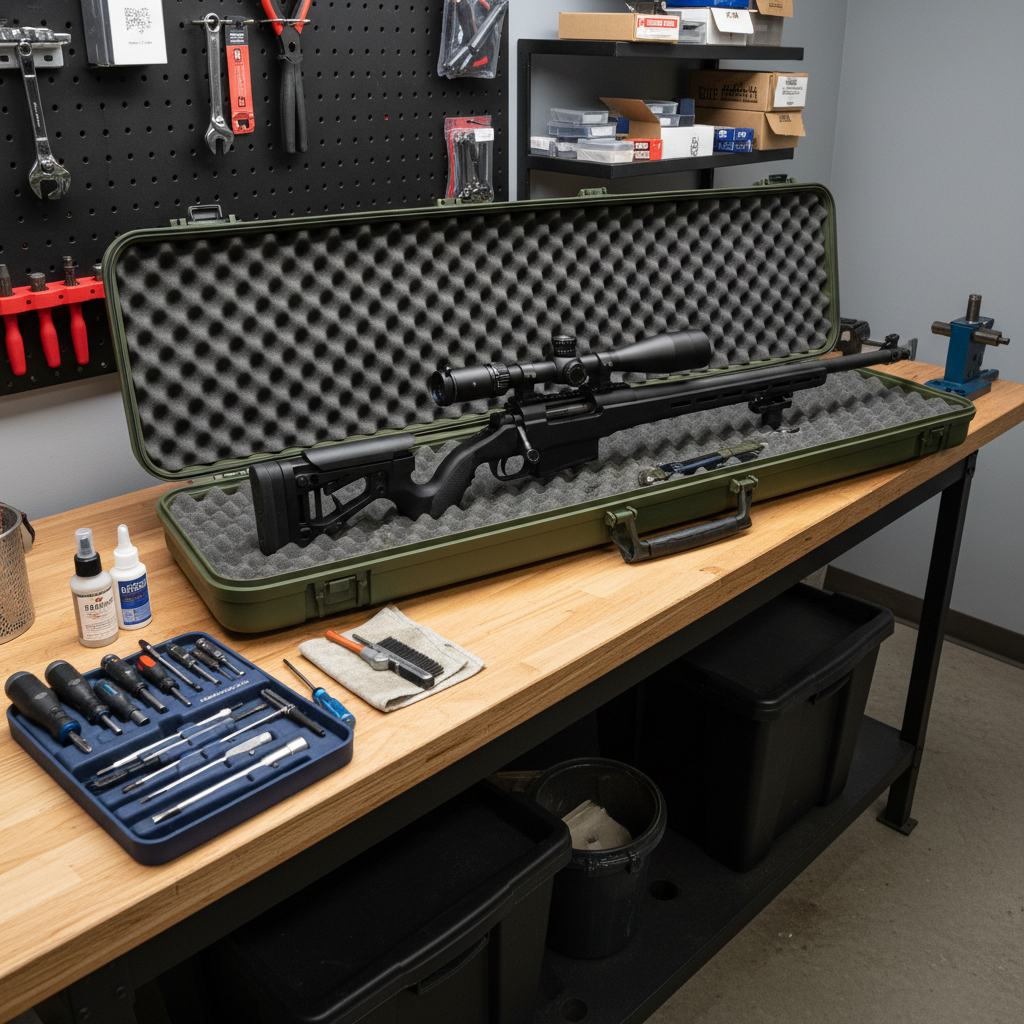
Once your workspace is clear and the firearm is verified safe, you must gather the tools necessary for the job. Many beginners reach for a generic, mass-market "best gun cleaning kit" housed in a plastic clamshell, but these often contain flimsy, multi-piece rods that can flex and damage your rifling. A professional approach requires individual, high-quality components tailored to your specific firearm.
The foundation of your kit should be a high-quality cleaning rod from a reputable manufacturer like Pro-Shot or Bore Tech. These rods are typically made of polished steel or have a specialized coating to ensure they do not pick up grit that could scratch the bore. Alongside the rod, you will need caliber-specific bore brushes, usually bronze or nylon, to break loose stubborn deposits. You will also need a supply of cotton patches, a utility brush, which resembles a stiff toothbrush, for scrubbing the action, and a lint-free microfiber cloth for the final wipe-down.
Selecting the right chemicals is equally important. A dedicated gun cleaning solvent is formulated to chemically break down carbon, lead, and copper fouling. However, solvents are aggressive and can leave the metal stripped of all protection. You must follow the solvent with a high-quality lubricant or oil. While the lubricant ensures the action cycles smoothly, its primary role in our humid climate is to provide a sacrificial barrier against moisture. This prevents the surface rust that can start within hours of returning from a damp day in the woods.
At our Rutland gun store, we stock these professional-grade components individually so you can build a kit that actually works. We prefer this modular approach because it ensures you have the right diameter brush and the correct length rod for your specific platform. Having the right supplies is the first real step in learning how to clean a gun like a professional, and if you ever find yourself missing a specific jag or specialized cleaner, Emily, Eric, Lee, and Mike are here to help you find the right match for your gear.
Bore Snake vs. Cleaning Rod: Which is Better?
A common question we hear at our shop is whether a bore snake is better than a traditional cleaning rod. The reality is that these tools serve two distinct purposes, and a well-equipped kit in Vermont should ideally contain both. A bore snake is essentially a weighted pull-through cord with integrated bronze brushes. It is unmatched for quick field maintenance. If you are tracking a buck through the brush and get light debris in the barrel, or if you want to pull the hot carbon out while still at the range, the bore snake is the right choice for an immediate clear-out.
However, for a comprehensive deep clean, a rigid rod is superior. A bore snake cannot provide the mechanical leverage or the consistent scrubbing action required to remove stubborn copper fouling or lead deposits that bake onto the rifling over time. When you bring your gear back to your bench for thorough maintenance, a solid rod allows you to use specialized jags and patches for a surgical level of cleanliness. We recommend using a bore snake for immediate post-shooting maintenance and reserving the rod for your monthly or post-season deep cleans. If your barrel has significant buildup that a rod cannot shift, our Rutland gun store provides professional firearm cleaning to restore your bore to its peak condition.
Step by Step: How to Clean a Handgun Properly
Understanding how to clean a handgun properly begins with field stripping the firearm according to its specific manual. For most semi-automatics, this involves separating the slide, barrel, and recoil spring assembly from the frame. If you are working with a revolver, swing the cylinder open and ensure all chambers are clear before proceeding. Use a utility brush dampened with solvent to scrub the breech face and the area under the extractor claw. Carbon buildup in these tight spots is a primary cause of failures to extract or chamber correctly.
Next, focus on the slide rails and the barrel. Apply solvent to a bronze bore brush and pass it through the barrel from the chamber end. The brush breaks up the lead and copper fouling that accumulates in the rifling. After brushing, run clean patches through until they come out white. For revolver shooters, remember that each chamber in the cylinder needs the same level of attention as the barrel itself. Pay close attention to the forcing cone, where lead buildup can affect accuracy and timing.
Lubrication is the final critical step, but it must be done with restraint. Modern handguns require significantly less oil than older designs. Over-oiling is a common mistake that actually hinders performance; excess lubricant acts as a magnet for pocket lint, dust, and unburnt powder, creating a slurry that can gum up the action. Apply a single drop of oil to each slide rail and a light film to the barrel hood. If you notice oil pooling or running, wipe away the excess with a lint-free cloth. If you discover stubborn lead deposits or signs of wear during this process, the team at our Rutland gun store is available for professional firearm cleaning and detailed inspections.
Cleaning Your Rifle or Shotgun After a Vermont Hunt
Long guns used in the Vermont woods face a distinct set of environmental pressures compared to handguns. When you are learning how to clean a rifle properly, the most critical technical habit to develop is always cleaning from the breech toward the muzzle. By inserting your cleaning rod through the action rather than the barrel tip, you protect the crown. The crown is the delicate edge where the rifling ends; even a minor scratch or nick caused by a vibrating cleaning rod can significantly degrade your precision. For bolt action rifles, we always recommend using a bore guide to keep the rod centered and prevent solvent from leaking into the trigger group.
The greatest threat to a hunting setup in Rutland County is often the transition from the field to the home. Bringing a frozen rifle into a 70 degree living room causes immediate condensation on every metal surface. This moisture becomes trapped in the dead air spaces between the barrel and the stock or underneath your optics. If you do not remove the action from the stock occasionally to wipe down the underside, or if you neglect the areas around your scope mounting base, rust will eventually form where you cannot see it.
Similarly, understanding how to clean a shotgun properly after a day of chasing birds involves more than just a quick bore scrub. You must pay close attention to the magazine tube and the gas piston system if you shoot a semi auto. Vermont mud and moisture can turn into a gritty paste that slows down your cycle rate. If you find that your hunting rig has developed surface rust from a particularly wet season, bring it into our Rutland gun store for an inspection. Emily, Eric, Lee, and Mike can provide a professional firearm cleaning that includes a full teardown to ensure no moisture is hiding in the trigger assembly or under the furniture.
How Often Should You Clean Your Gun?
Determining how often to maintain your gear depends entirely on the firearm’s purpose and the environment it inhabits. Many new shooters ask if they are supposed to clean their gun after every single use. While a quick wipe down never hurts, modern firearms are robust. A dedicated range pistol or plinking rifle can typically go three hundred to five hundred rounds before carbon buildup affects reliability. However, firearms used for everyday carry require more frequent attention. For a CCW handgun, you should perform a basic cleaning once a month or immediately after any high-exertion activity where sweat may have reached the frame. Salt from perspiration is highly corrosive to steel finishes.
Hunting rifles require immediate care if they encounter Vermont’s rain or snow. Do not let a wet rifle sit in a soft case overnight; this is a recipe for surface rust. Even if a firearm stays in the safe, our humid Vermont summers demand a different schedule. Moisture in the air can settle on stagnant metal, so we recommend wiping down unused guns with a lightly oiled rag every few months to maintain a protective barrier. If you are unsure how long a gun can go without cleaning based on your specific storage setup, visit our Rutland gun store for personalized advice. Learning how to clean a gun effectively includes knowing when the environment, rather than the round count, dictates the schedule. If your maintenance schedule has slipped and you notice internal grime or grit, our team offers professional firearm cleaning to get your equipment back to baseline.
Common Mistakes: Can You Overclean a Gun?
The question of whether you can overclean a gun often stems from seeing unnecessary wear on high mileage firearms. While you cannot technically make a firearm too clean, you can certainly damage it through poor technique or improper tools. One of the most frequent errors we see at our Rutland gun store is muzzle wear caused by scrubbing a barrel from the front with a steel cleaning rod. This repetitive friction can crown the muzzle unevenly, which directly destroys your rifle’s accuracy.
Another common pitfall involves using the wrong size brush or bore jag. Forcing an oversized brush through the bore can lead to a stuck rod, while using a brush that is too small fails to engage the rifling at all. Furthermore, shooters often reach for harsh industrial degreasers that were never intended for firearms. These chemicals can strip the oils out of a classic walnut stock or degrade specialized modern coatings. If you are worried about your technique or have a stubborn carbon ring that will not budge, seeking professional firearm cleaning is a safer alternative to aggressive scrubbing. Truly understanding how to clean a gun involves knowing when to stop applying force and when to let the chemistry do the work.
When to Call the Pros: Professional Cleaning and Maintenance in Rutland

Routine maintenance is a skill every owner should master, but certain situations require specialized equipment and a deeper level of disassembly. At ELC Pews, we provide professional firearm cleaning that goes far beyond a standard field strip. For firearms with heavy carbon buildup or those that have been exposed to the elements, we utilize ultrasonic cleaning. This process uses high frequency sound waves to reach deep into the fire control group and other intricate parts where traditional brushes cannot reach.
If you discover surface pitting or stubborn rust that persists after your regular routine, bring the piece into our Rutland gun store. Emily, Eric, Lee, and Mike can perform a detailed inspection to ensure the structural integrity of the metal remains intact. We also integrate maintenance with our scope mounting services, ensuring that your optics are properly torqued and leveled while the action is free of debris. Knowing how to clean a gun involves recognizing when a professional detail strip is necessary to protect your investment for the long term.
Maintaining a clean firearm is the best way to ensure safety and longevity, especially given the seasonal humidity and moisture we face here in Vermont. While routine cleaning is a skill every shooter should master, some deep maintenance tasks are more complex. If you want expert help to ensure your equipment is in peak condition, you may find our professional Services to be a helpful next step. We are dedicated to helping you keep your firearms reliable and ready for your next trip to the range.